
Here are six legendary ads and sales letters that show you how to master key copywriting elements from the headline to the close.
Let’s get started.
The Man in the Hathaway Shirt by David Ogilvy
Ogilvy is known for iconic campaigns for brands like Rolls-Royce, Dove, and Schweppes.
But if I had to choose my favorite, it would be the Man in the Hathaway Shirt ad from 1951.
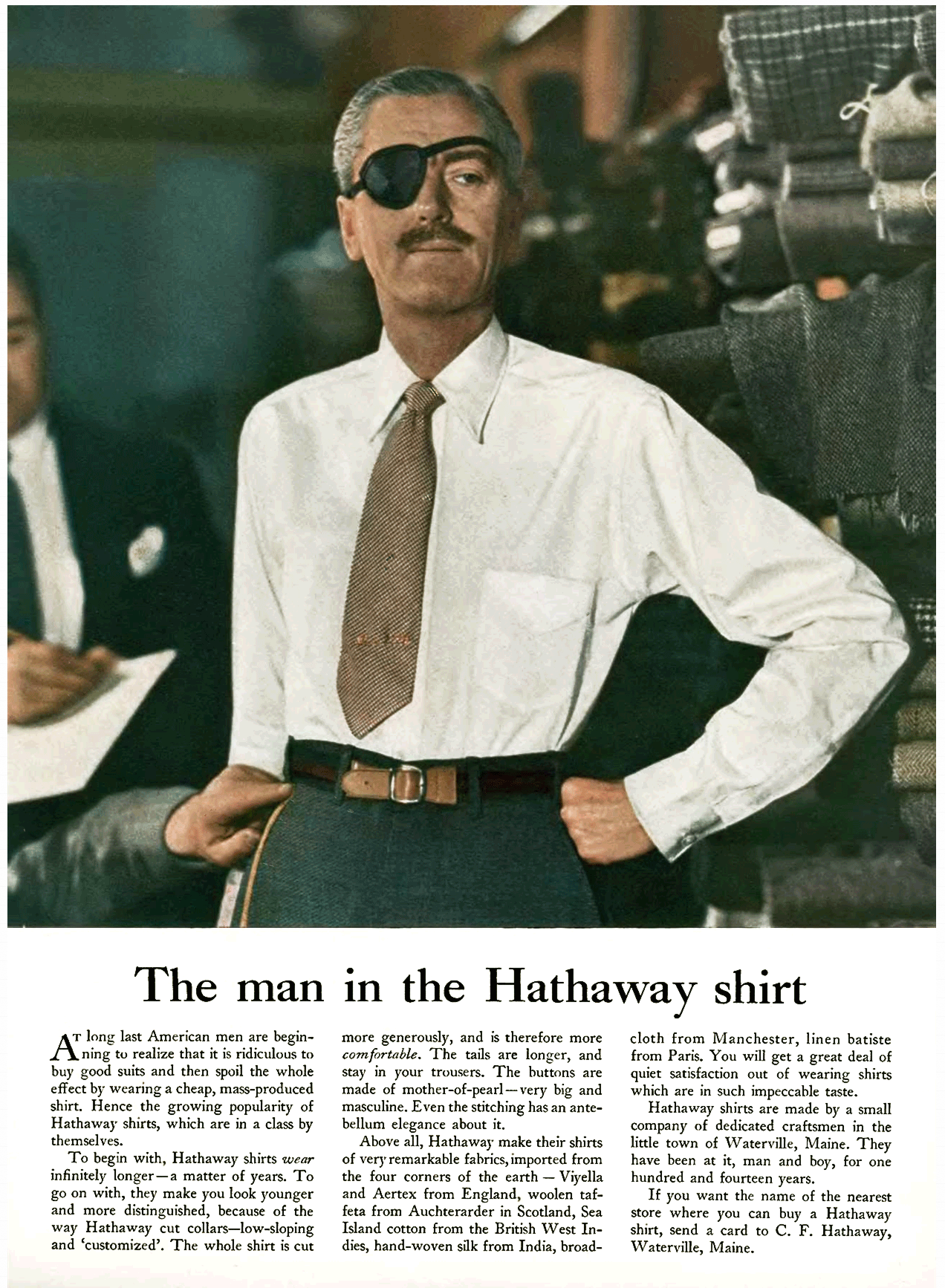
Hathaway Company had been making shirts for over a century, but by the 1950s the brand was slipping into obscurity.
In 1951, they hired Ogilvy to turn things around.
Ogilvy in turn hired Russian Aristocrat Baron George Wrangell (with 20/20 vision) to star as the new face of the brand.
So what’s with the eye patch?
Well, the day of the photoshoot Ogilvy had an idea:
He remembered a photo he once saw of Lewis Douglas, a public servant who lost an eye in a fishing accident.
Douglas wore an eye path for the rest of his life.
Ogilvy remembered how it gave Douglas a mysterious quality, so at the last minute he asked Wrangall to put on a black eye patch.
And so the “Hathaway Man” was born.
Once the ad went into circulation, it was a hit.
You couldn’t ignore the elegant man with the eye patch — it pulled you in with the promise of a fascinating backstory.
People went crazy for the shirts because they too wanted to appear worldly, mysterious and elegant.
In short, the campaign turned Hathaway’s business around.
The lesson?
Whether you’re posting an article on Medium or creating an international marketing campaign, take the time to find the right image to complement your copy.
Extra points if you can add a unique or surprising detail that fits the narrative.
Million Dollar Smile by Gary Halbert
Gary Halbert is considered the best direct response copywriter of all time.
His most famous sales letter is “The Coat of Arms” letter (which you can read here.)
But I want to talk about the “Million Dollar Smile” ad because of the brilliant headline:
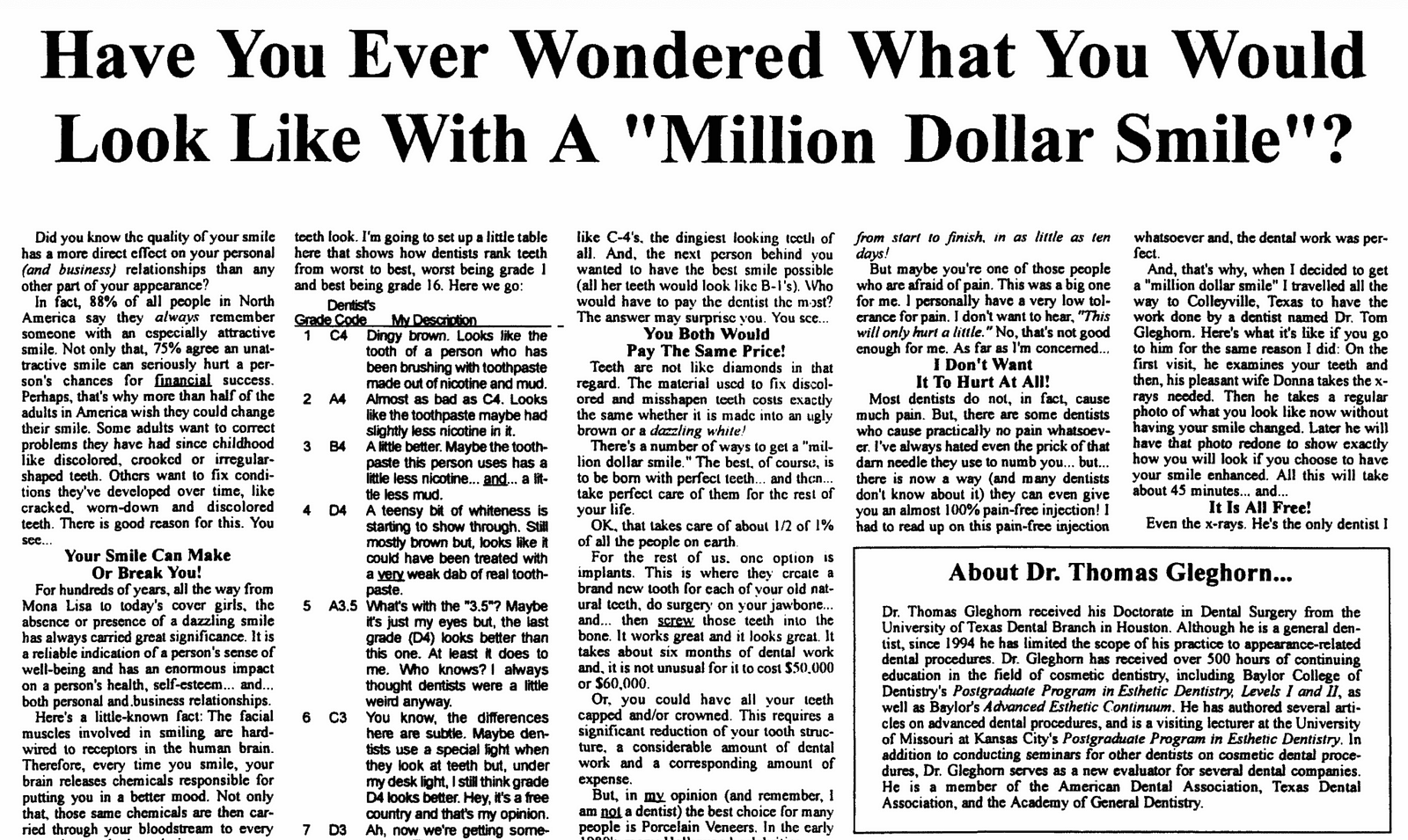
If your sales copy doesn’t have an image then the most important element is the headline.
It must catch your reader’s attention AND compel them to read on.
Otherwise your ad will fail — no matter how excellent the rest of the copy is.
The “Million Dollar Smile” ad does this beautifully for three reasons:
- It asks a question that instantly paints an image in your mind
- That image sparks your sense of vanity — how much more attractive would you feel with perfect teeth and a gorgeous smile?
- Words like “million dollar” and “smile” make you subconsciously associate a nice smile with glamour, wealth and beauty — who’d say no to that?
You can see why someone with less-than perfect teeth would have a hard time ignoring this ad.
The lesson?
Find a headline that speaks to the deepest desires of your reader.
In this case, it’s not just about nice teeth. It’s about how feeling more confident and attractive can change your life.
Food Is Your Medicine by Eugene Schwartz
Once you’ve found the right headline, the next step is to master the subtitle.
Ideally it should be just as potent as your headline.
Take a look at the Food is Your Best Medicine ad from copywriting wizard Eugene Schwartz:
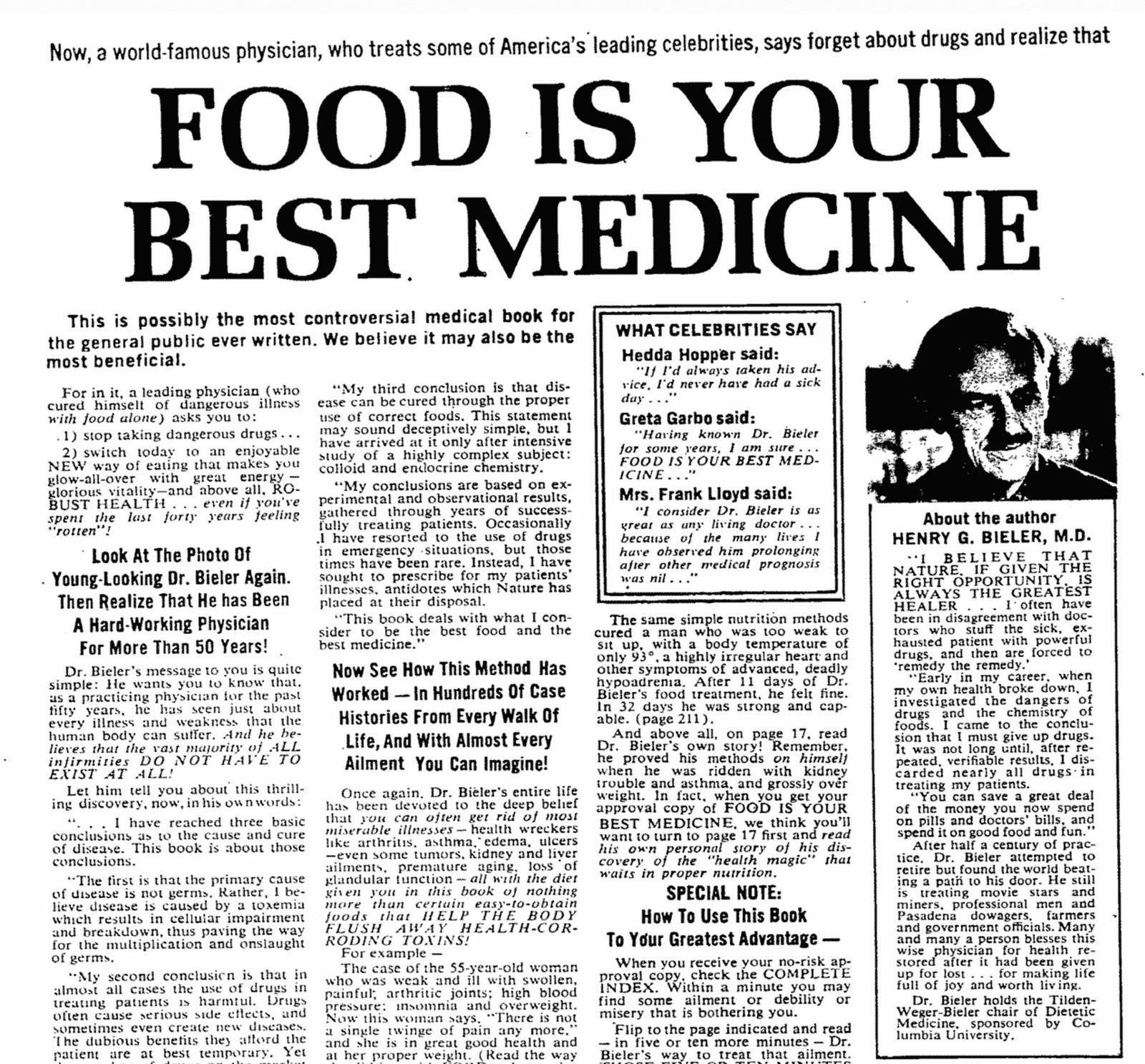
Yes, the headline grabs your attention, but it’s really the subtitle that seals the deal and keeps your attention.
It reads:
“This is possibly the most controversial medical book for the general public ever written. We believe it may also be the most beneficial.”
Words like “controversial” and “beneficial” pique your curiosity — you want the life-changing knowledge contained in the book.
So you keep reading and before you know it, you’re hooked.
The key is to use a subheading that creates even more curiosity.
It should make a big promise to the reader:
If they keep reading they’ll discover something that will vastly improve their life.
5 Mistakes by Claude Hopkins
Claude Hopkins is known for pioneering the use of data and research to inform ad campaigns.
Which of his ads should you study?
Hard to pick just one.
But if you want to learn how to write a powerful lead, then I’d recommend the “5 Mistakes Palm Olive” campaign:
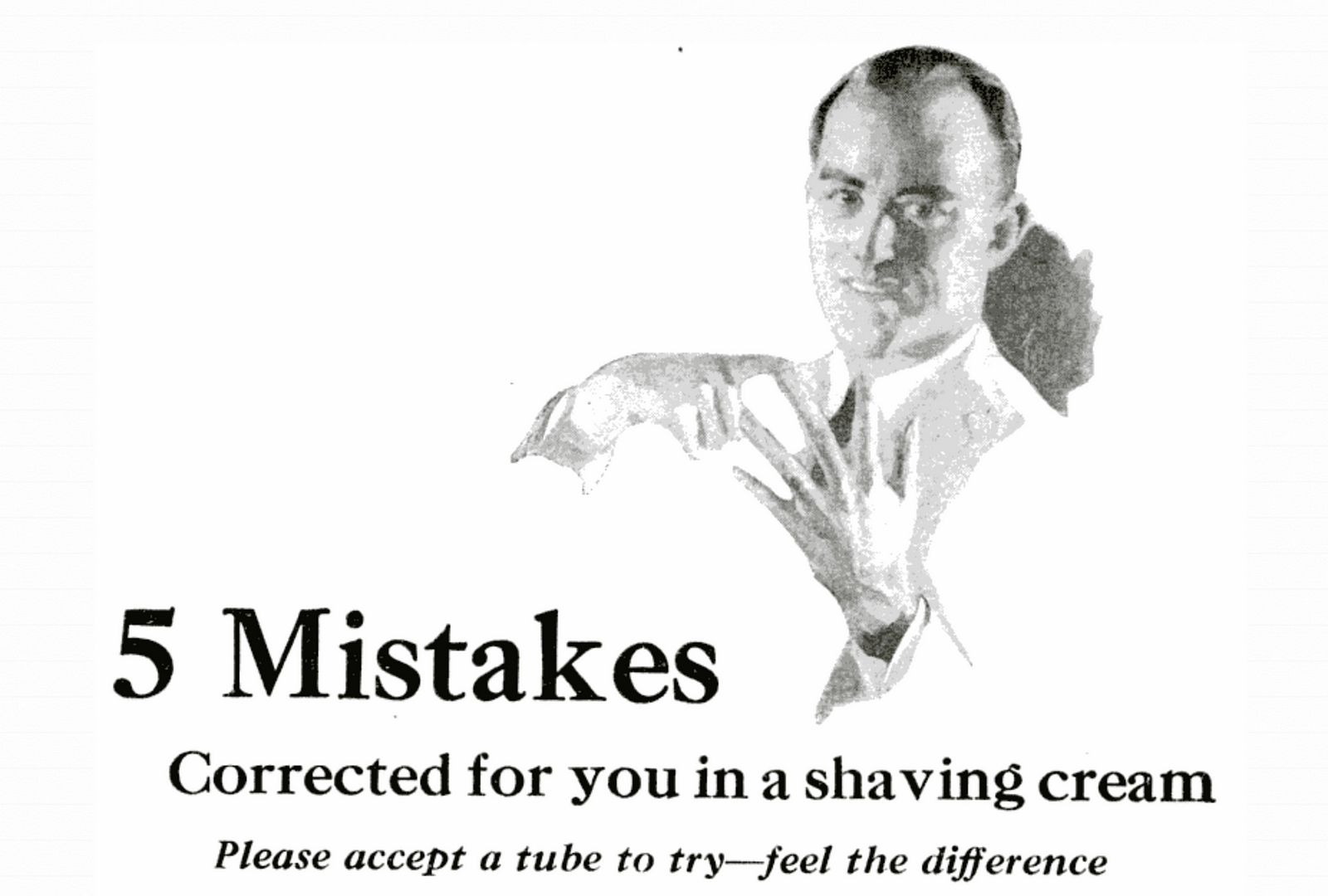
The lead is the opening section of your copy and comes right after your headline and subtitle.
Once your prospect lands on this section, you have only a few seconds to convince them to keep reading.
There are many different lead formulas, and if you’re curious to find out more I’d recommend this book.
But one of the most reliable and classic leads you can use is the ‘PAS’ formula— address the problem, agitate it, then provide the solution.
Take a look at how Claude Hopkins does this in the ad:
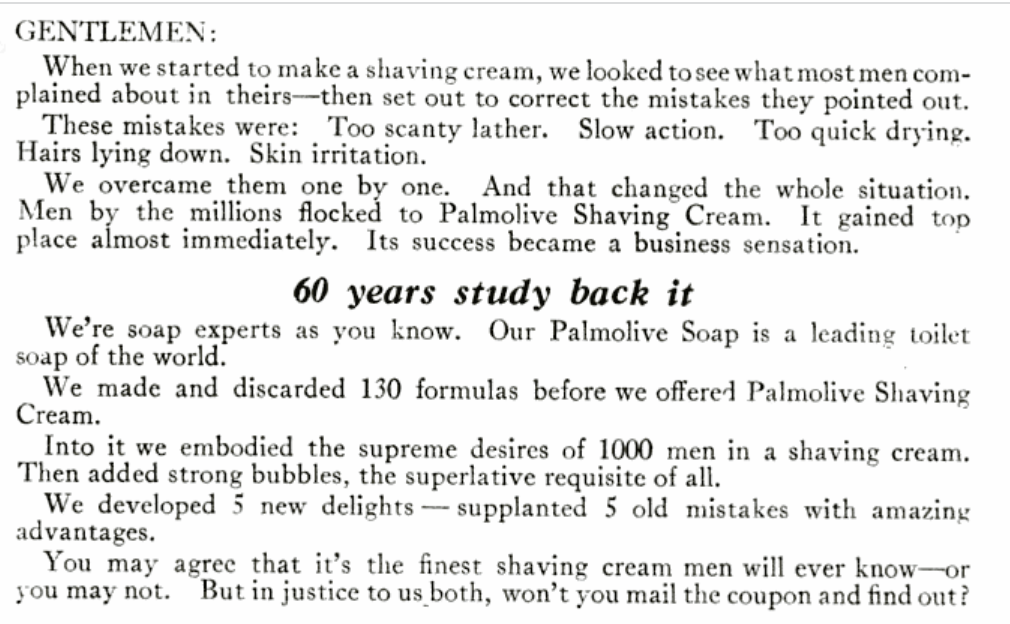
First, he names the problem — many men aren’t happy with their shaving cream.
Then, he agitates the problem calling out specific issues men face when shaving — not enough lather, too dry, too slow, too irritating.
Finally, he presents the solution — Palmolive.
Notice how he does all this in two short paragraphs.
Without naming a single competitor, Hopkins makes you conclude that every other brand is inferior since Palmolive had to correct all of their mistakes.
But there’s something else brilliant that Hopkins does:
He subconsciously makes you believe your skin looks subpar when you use other brands through words like “dry, irritated, hairs lying down”.
It hits on the reader’s vanity — a powerful emotional thread that continues throughout the rest of the copy.
They Laughed When I Sat Down At The Piano by John Caples
John Caples was a copywriter and author known for his ability to write headlines that grabbed readers’ attention.
This is one of his most famous sales letters:
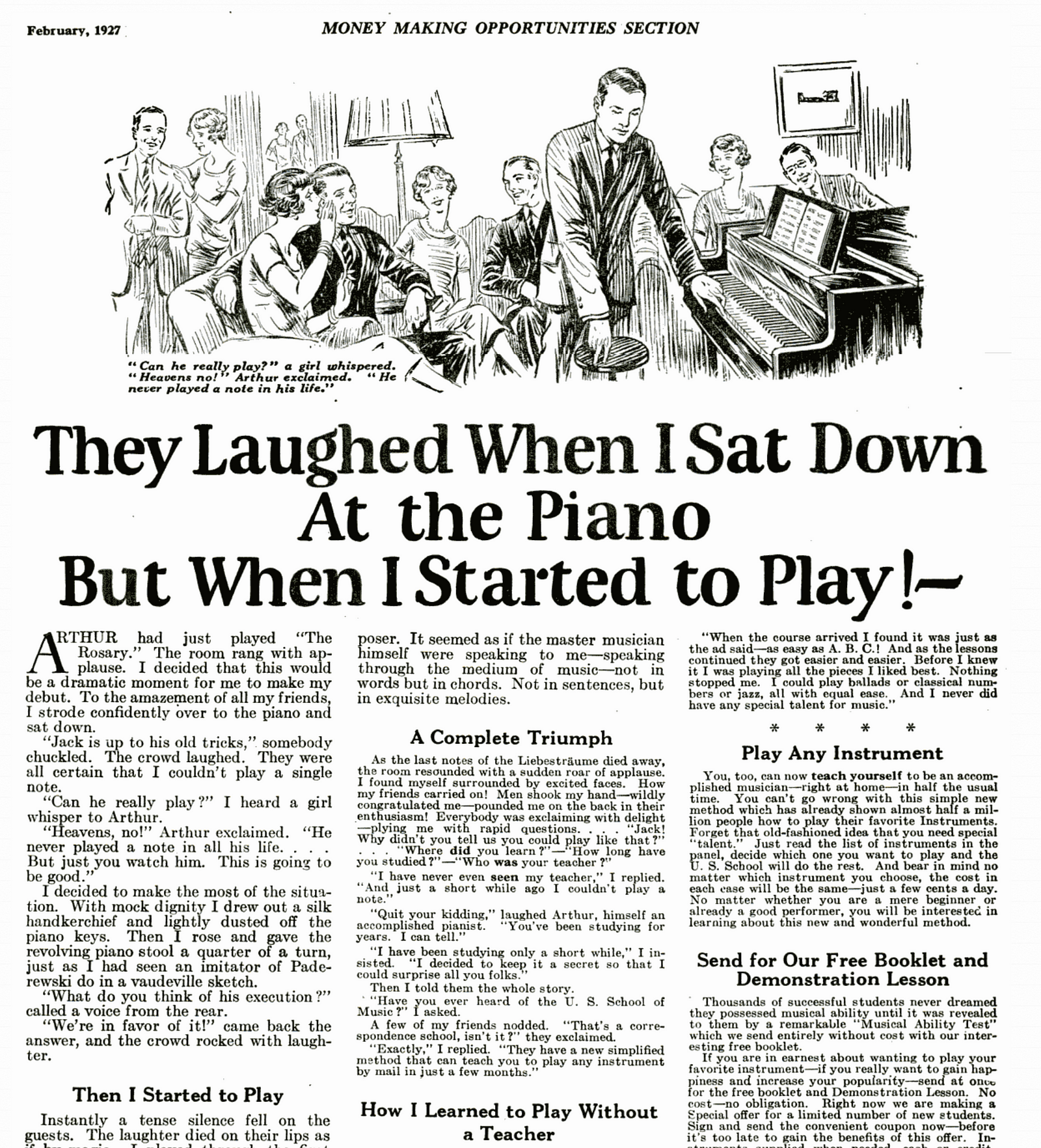
This ad is a prime example of how to sell through storytelling.
It tells the story of a man named Arthur who decides to impress his friends by playing the piano.
However, since he has no natural talent everyone doubts him and assumes he’ll embarrass himself.
As a result, the story hits on two universal social needs:
- The desire to be accepted, respected and liked by our peers.
- The desire to show up anyone who doubts or insults us.
Even though the ad starts off triggering negative emotions, it ends on a positive note: Arthur leaves the crowd wide-eyed with admiration.
Then, it gives the reader the exact tools to achieve the same result.
In this way, storytelling is a powerful way to mirror your readers’ desires and emotions all while leading them towards a solution.
Plus, who doesn’t love a good story?
The Consulting Sales Letter From Frank Kern
Unlike the other Copywriters on this list, Frank Kern is still alive.
And he’s one of the best direct response copywriters of the digital age.
His copy is great from start to finish.
However, the part he excels at is the close.
You can have the most tantalizing headline, jaw-dropping copy, and mesmerizing images…
But they’re worth nothing if you don’t get the reader to do something about it.
In most cases, you want them to take you up on an offer.
The best way to do that is through a compelling Call to Action that tells your reader exactly what to do and how to do it, without waiting a moment longer.
Frank Kern is a pro at this. Take a look at how Kern masterfully approaches the close in his Consulting Sales Letter:
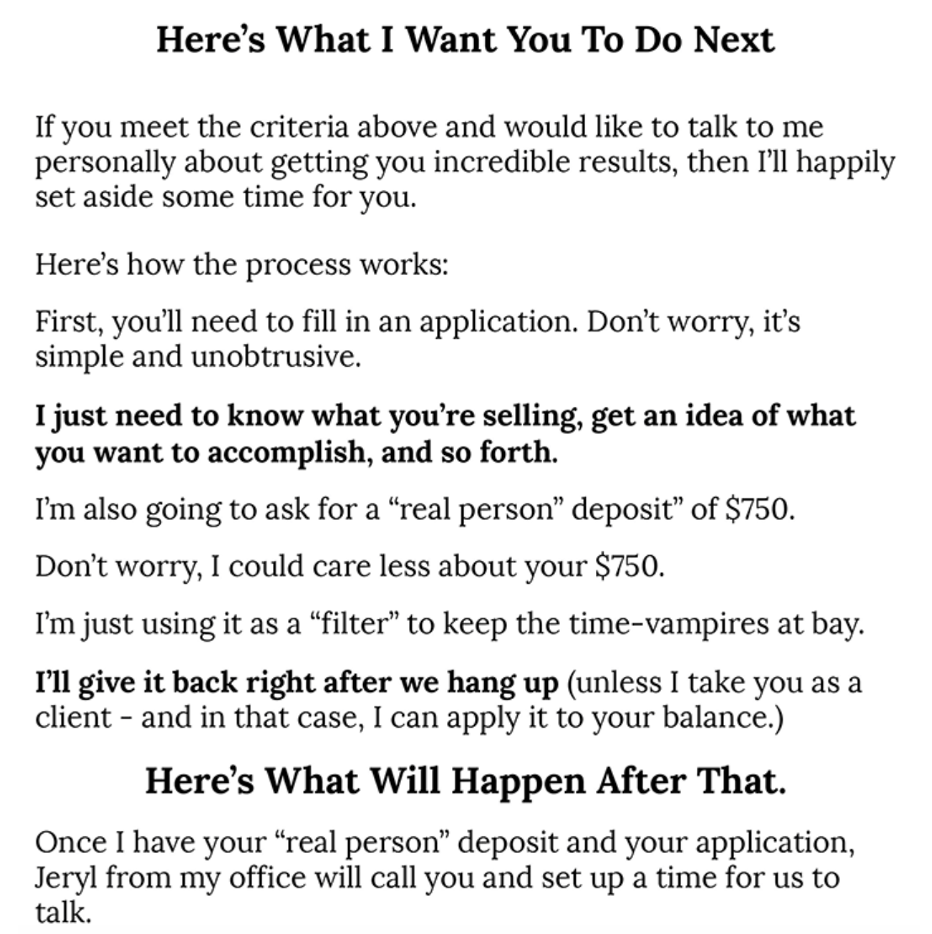
The copy does a number of things to keep the reader engaged and eager to take the next step:
- Kern uses direct language telling you EXACTLY what he wants you do to
- He shows you why you’re getting the deal of a lifetime
- Kern adds in urgency so you take action ASAP
The result is a clear call to action that compels you to take him up on the offer before leaving the page.
Which example did you find the most inspiring and helpful? Let me know in the comments!
Download your Free Guide to the 13 Essential Books to Read at Every Stage of Your Copywriting Career
 Lyuba golovina
Leave a comment